Project Good for Girls is a not-for-profit organization that supports girls in countries around the world to gain the education, skills and self-esteem they need to become independent, empowered adults able to realize their full potential and be forces for change in their communities.
Project Good for Girls has been supporting our partner in Ethiopia to provide skills-training to girls. This is an important aspect of meaningful education, where girls are equipped not only to stay in school and complete their education, but also to be able to seize opportunities for sustainable income-generation in today’s changing economy, whether through digital skills, higher education or vocational livelihoods.
Given that higher education is not for everyone — and largely inaccessible to most young people in the country — skills that focus on employability, entrepreneurship and vocations are essential to create pathways to independence for girls, especially when many are being pressured to marry early as a means to security and support.
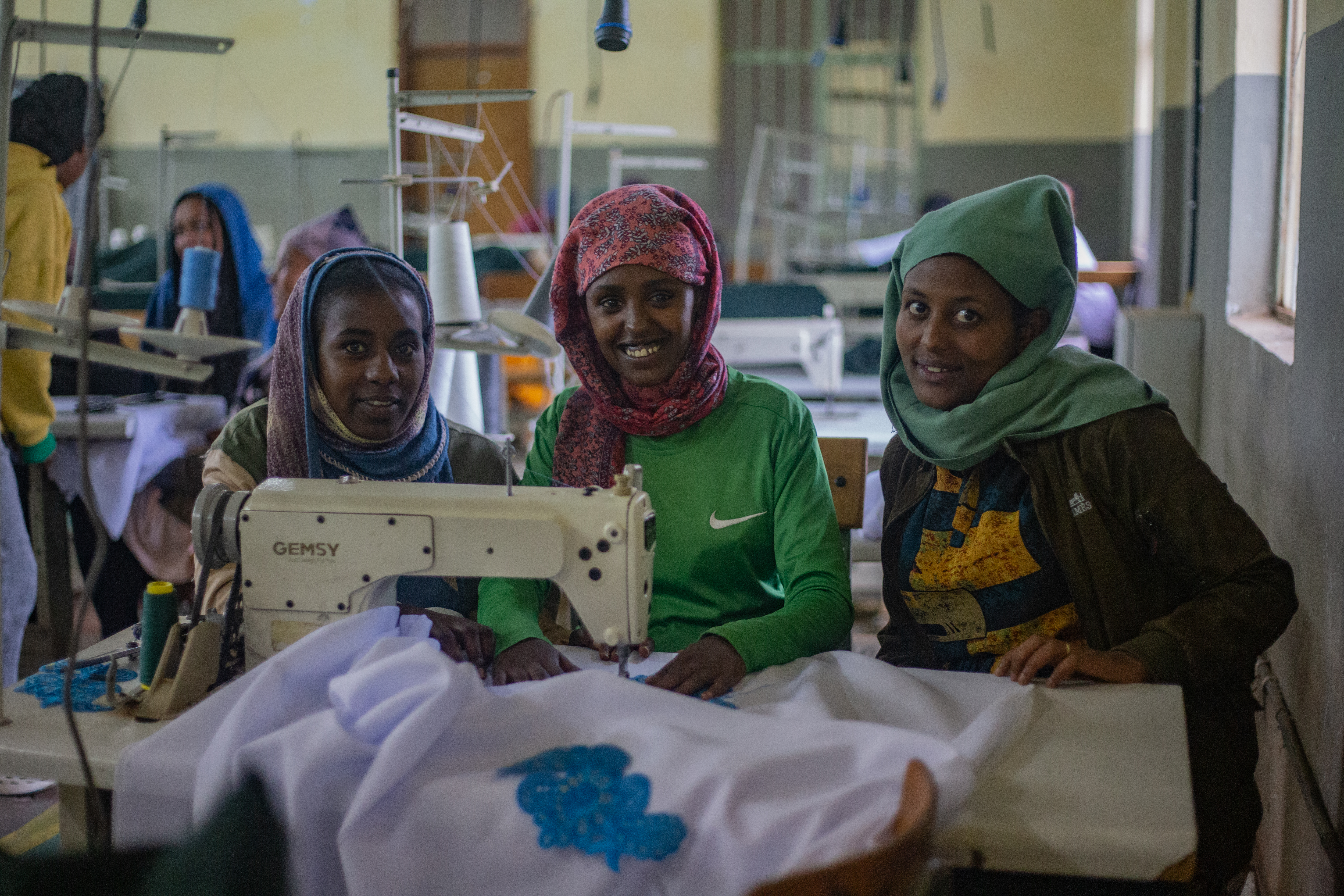
One of the needs-based initiatives, requested by the girls themselves, is sewing and garment making. In the fall, the first co-hort of 14 sewing students in Bekoji completed their 3-month training, gaining comfort with machines and producing items like clothes, bedsheets, and pillows. The next step will be helping them to launch their own cooperative business, including renting workshop space and providing sewing machines and materials so they can begin making school uniforms and other products to sell in their communities.
The sewing group is made up of some girls in their final year of high school, some who have graduated, and some in 11th grade.
From Nov 14-25 2024, I joined a group of donors and supporters on an amazing trip to Ethiopia, organized by our partner and grantee Girls Gotta Run Foundation (GGRF). In the decade that we have been partners I have not had the chance to travel to this beautiful country to see the programs that we support, so this was quite simply the trip of a lifetime for me!
After a few days in Addis Ababa the capital, where we took part in the Great Ethiopian Run (an annual 10K race through the streets of the city), we travelled to Bekoji, a rural, farming community about 9,300 ft above sea level. This is a place considered the ‘land of runners’, because so many of Ethiopia’s elite distance runners come from there, such as Derartu Tutu – the first Ethiopian womn and Black African woman to win an Olympic gold medal, and Tirunesh Dibaba – the youngest female athlete to win individual gold at the World Championships.
The GGRF program in Bekoji includes about 60 adolescent girl athletic scholars – who receive support to stay in school, to train under a female coach, and to attend lifeskills classes. This helps them to delay marriage, gain an education, and develop their physical and intellectual strengths. In addition, GGRF also supports the mothers of the girls, by organizing Savings Groups and seed money for income-generation projects.
We joined the girls at their morning training. The terrain is uneven and hilly and after just 5 minutes I was huffing and puffing.
Drills…UPHILL! (It really hit home at this point why Ethiopians are so dominant in distance running!)
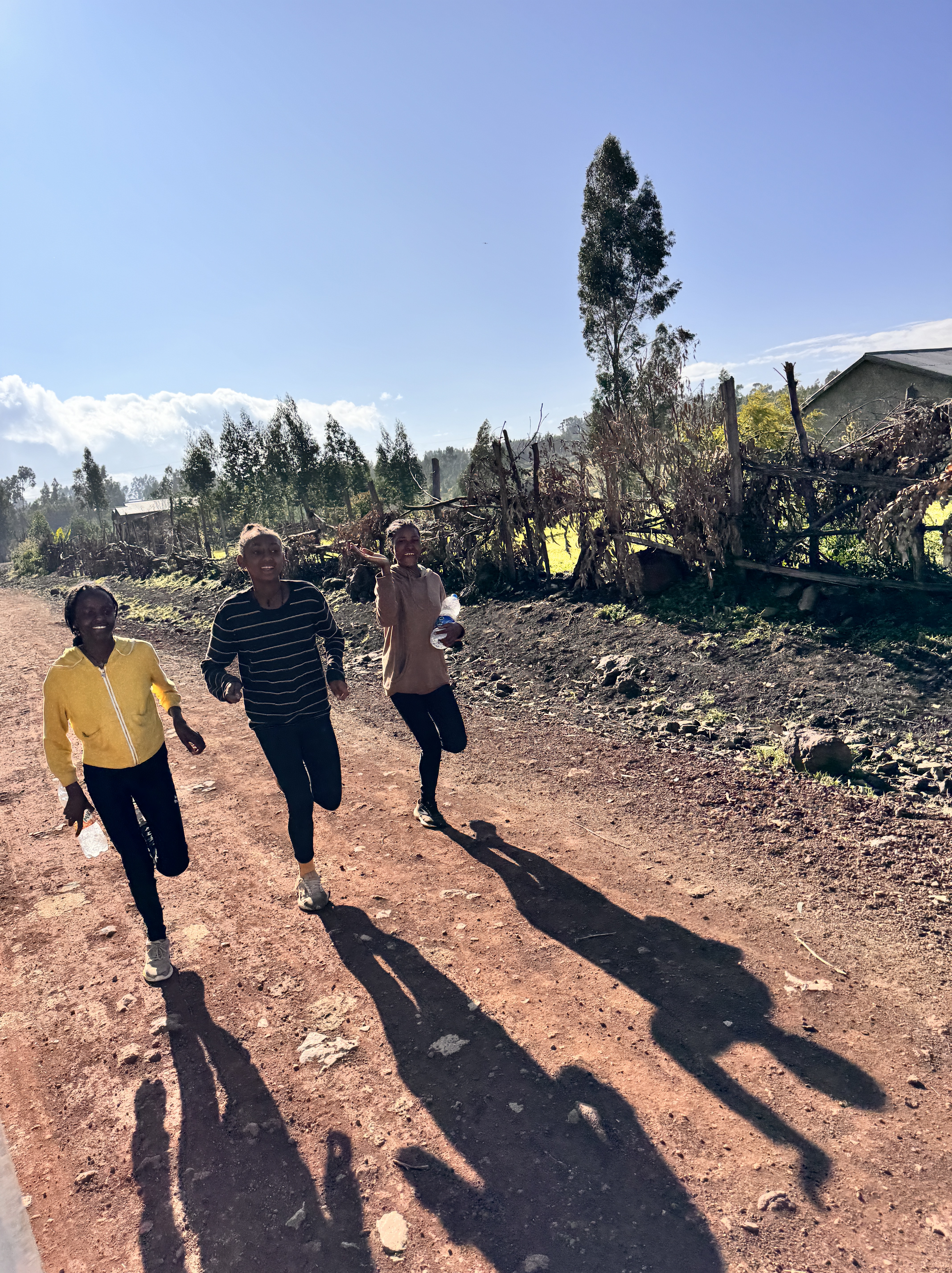
The girls run to and from their training – often several miles back and forth. Here they are running alongside our bus to meet us. Many of them were actually faster than our bus.
(Below) Coach Fatiya leading a warm-down stretch session. Once a promising professional runner, she had to give up her career after serious injury. Her abilities as a coach and a strong role model have become legendary, so much so that boys and younger girls have started joining her training sessions for the GGRF athletic scholars. The boys are welcome to join as long as they are respectful and recognise that the training focuses on the girls. This allows them not only to learn from a strong female leader, but also experience first-hand what gender equality is about – that girls are just as strong, just as committed and just as valued as boys.
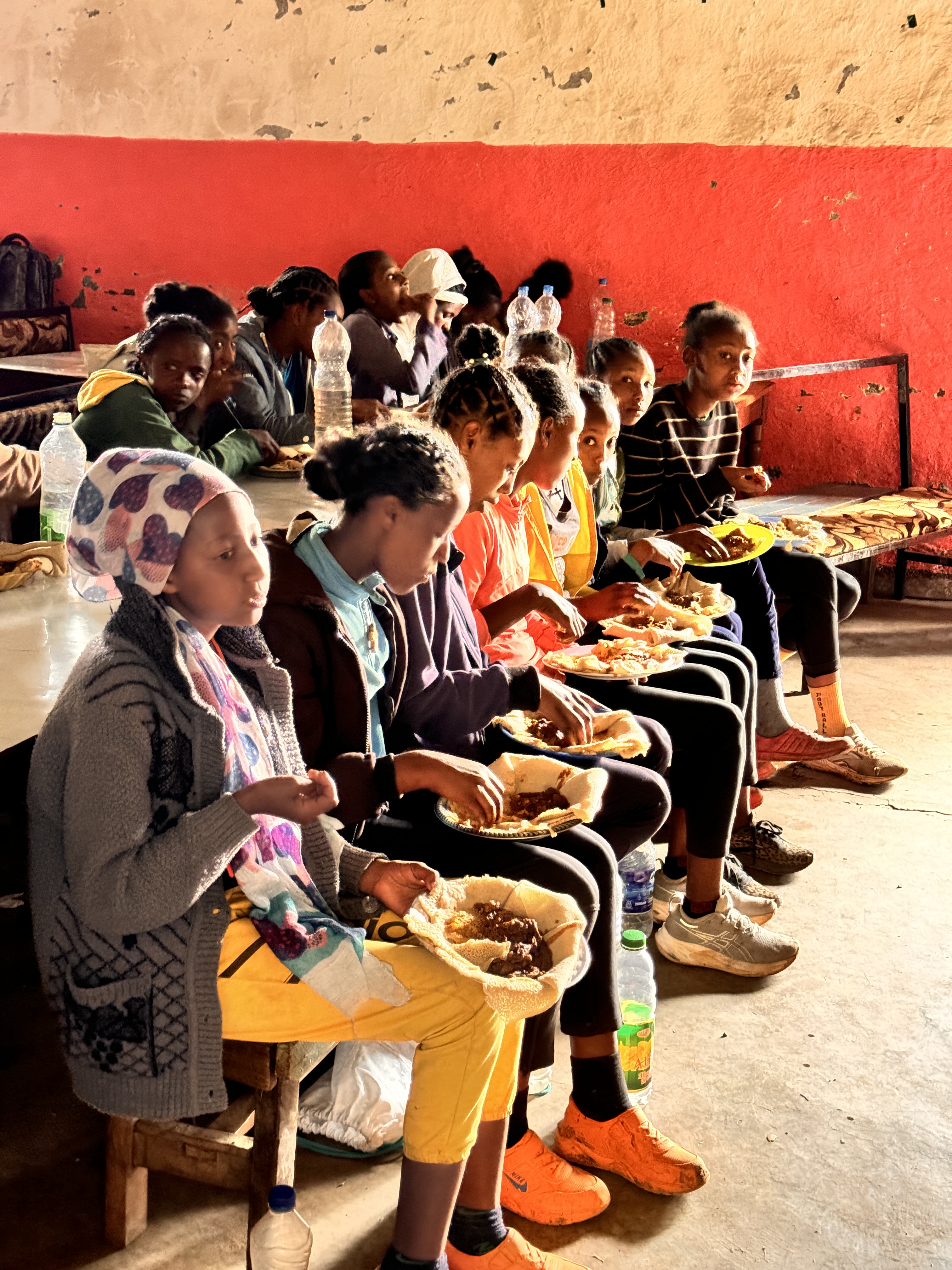
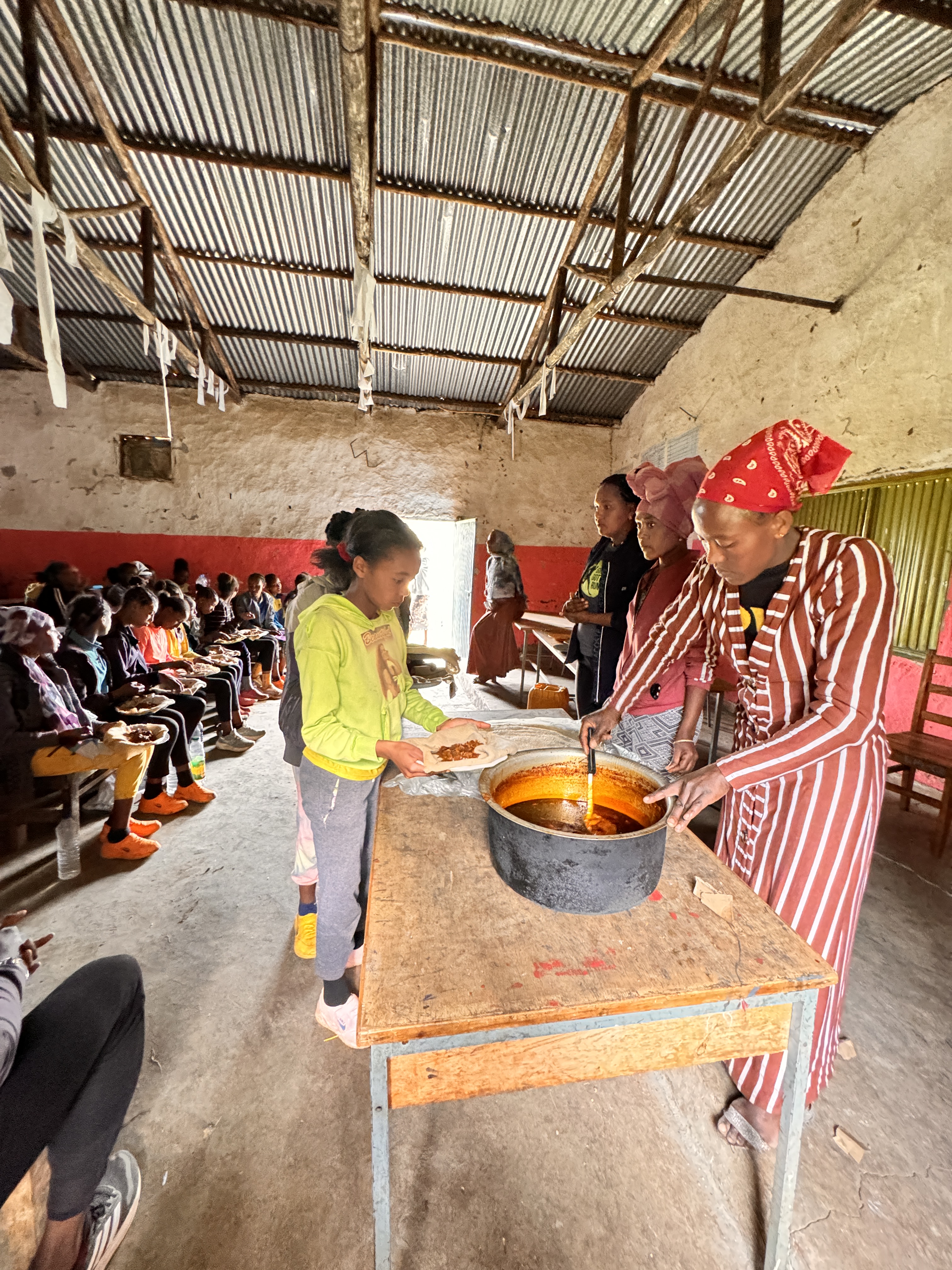
After training, the girls walk/run home to change, and then they meet at school to have lunch. This is cooked by 2 of the girls’ mothers, who amongst themselves take turns everyday going to the market to buy food and then cooking for the entire group. Because of rampant inflation, cutbacks have had to be made on the protein the girls get, so they may not get meat every week. Pictured together are Desta Ragasa who cooked today’s meal and her daughter Kume Gamachu, 15, who’s in the 6th grade. The lunch the girls get everyday is essential, given their rigorous training, and the fact that they attend school in the afternoon. (In Bekoji, the sheer number of students versus the limited availability of schools means there are 2 separate school sessions in the morning and afternoon in order to accomodate everyone.)
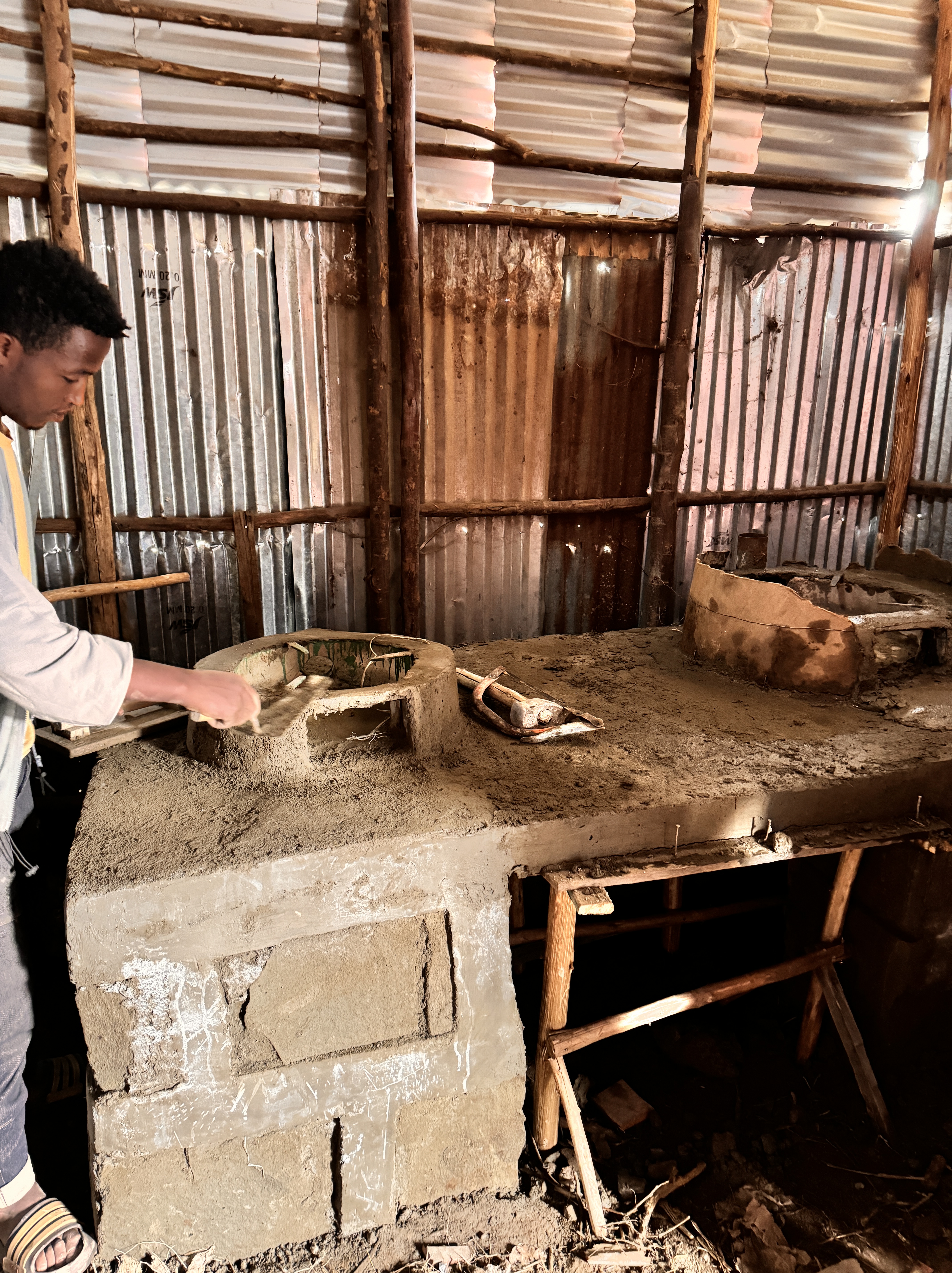
Below is the rudimentary kitchen where the girls’ meals are prepared by their mothers. Essentially a large wok on a ‘stove’ made of rocks in a windowless shed. The work is literally backbreaking and unhealthy because of the smoke that fills the small space. GGRF is working on building a new kitchen (almost complete!), which will be life-changing – a proper cooking set up in a bigger space with ventilation (next photo).
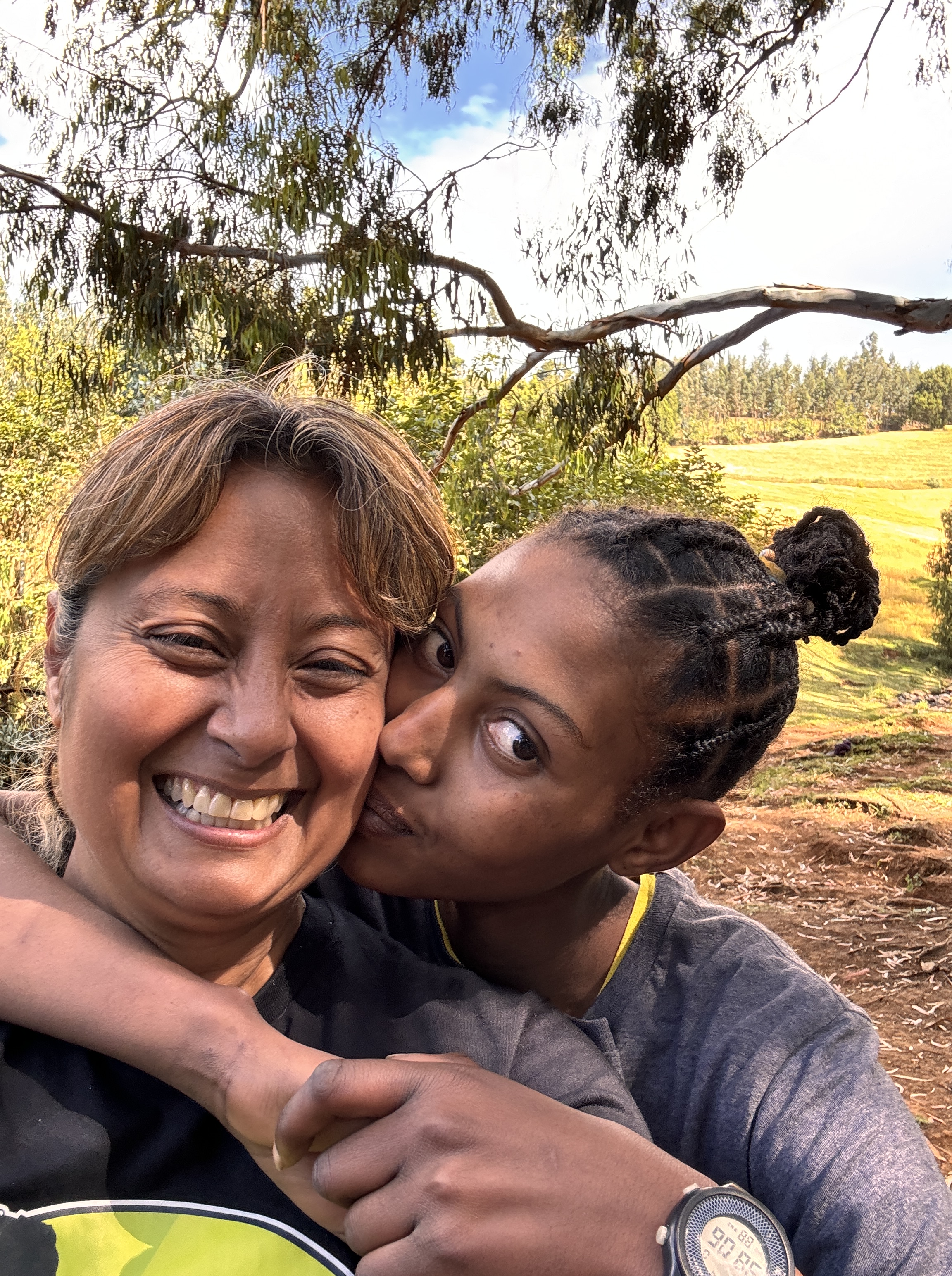
The warmth and love that we received from the girls, despite only spending time with them over 3 days, left an indelible mark on our hearts. Siddise Mekonen (first photo below), who is 15 and in the 9th grade, is a talented athlete and dancer who also wants to be a doctor. Her mother, Mihret Tesfay, is a member of the Mothers Savings Group. She grows vegetables on her small plot of land enough to support her family but not quite enough to sell at the market, so the support from the GGRF program is much needed – “With GGRF I felt my life change from darkness to sunshine. I want to be like Derartu Tulu,” Siddise told me.
Like her, Aster Dejen (second photo below), 15 and in 6th grade (because she started school late), also aspires to be an elite runner and a doctor. She told me that she didn’t know anything about running at all before she became a GGRF athletic scholar. Now, her life is different in many ways, “I have enough food, I can afford sanitary supplies, I get gear to train and I’m even learning English which I love. I want to be a doctor and a famous runner when I’m older.”
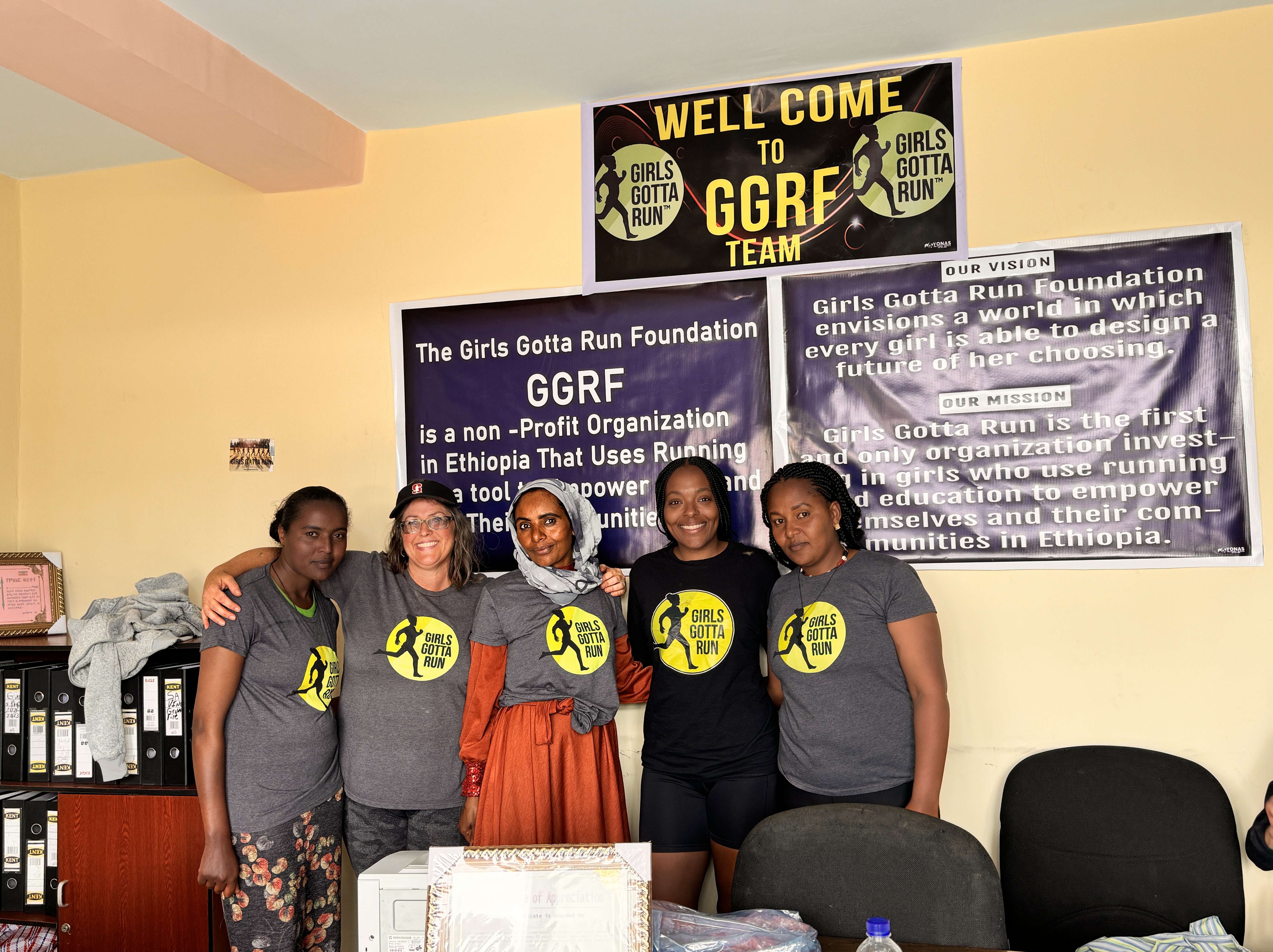
In the photo below is the GGRF team in their brand new office space. Left to right: Samrawit (admin), Arbora (Senior advisor based in the US), Sukare (program manager in Bekoji), Blaine (Executive Director based in the US and Ethiopia), Fatiya (athletics coach and life skills mentor).
Fundraiser by Project Good for Girls, featuring Sensei Amelia Sheftall of KP for Kids!
For tickets, please use our online GoFundMe link to purchase, and then send an email to projectgoodforgirls[at]gmail.com with names of attendees. (*Apologies for the complexity but GoFundMe won’t allow this directly from their site)
A graduate of Cornell university, Sensei Amelia Sheftall, is a fourth degree black belt. As a fan of sports who also experienced bullying as a child, she began training in karate in 1985. This exposure to martial arts led to a desire to pursue a career as a karate teacher for both children and adults, which she began in 1987. Sensei Amelia teaches children’s after school karate programs, Pilates and Gyrotonic Movement full-time and has fulfilled her dream of doing what she has always wanted to do for a living – sharing knowledge and helping others, especially children.








 Project Good for Girls