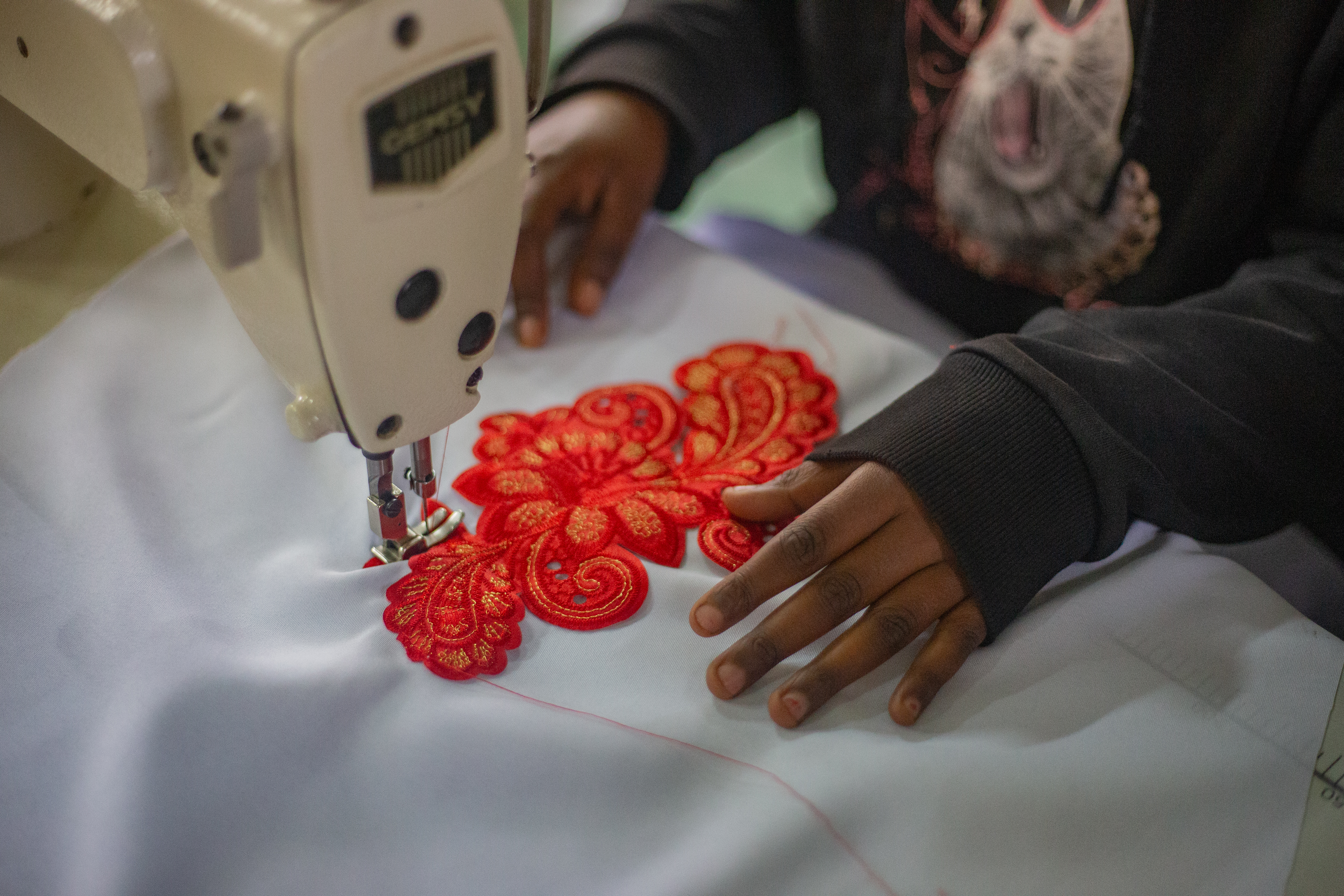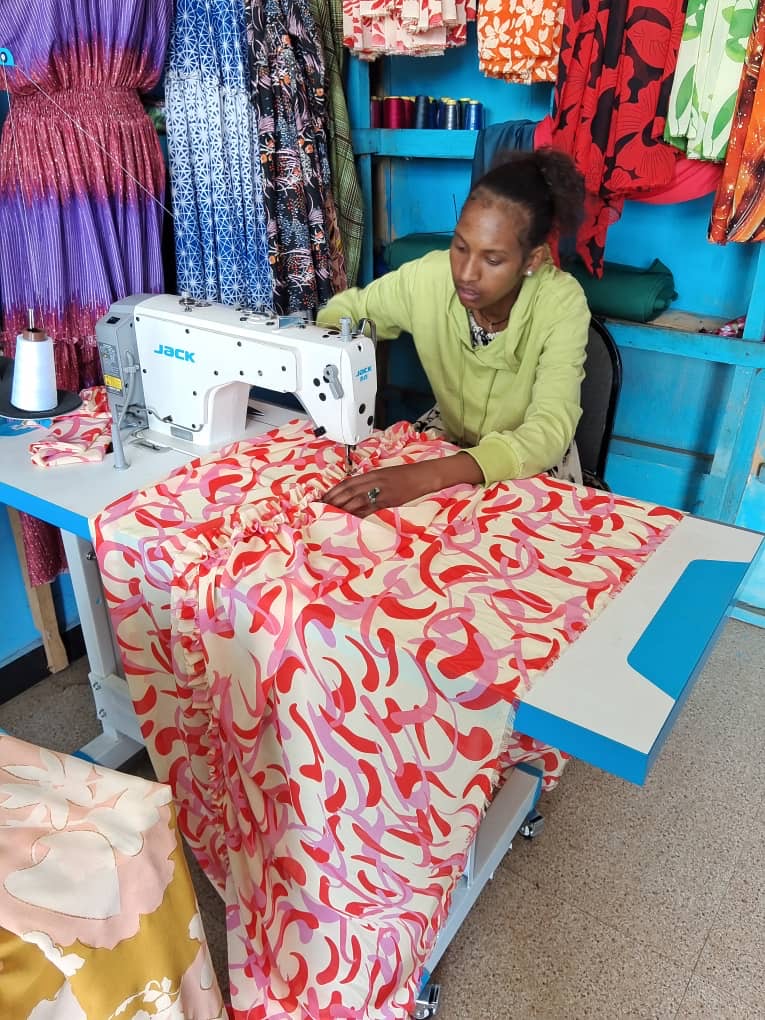
A year ago, we wrote about a cohort of teen girls in Bekoji, Ethiopia who were training to be seamstresses.
Garment making is one of the vocational training initiatives that our parter Girls Gotta Run Foundation is providing as part of expanded alumni opportunities for girls who have graduated from their Athletic Scholars programme. It is one of the needs-based skills initiatives requested by girls themselves as a way to build economic security for themselves and their families. Partnering on this work is very important to us at Project Good for Girls, because we believe in supporting girls to transition from education and skills development to economic independence that makes a tangible difference in their lives as they become adults.
Fast forward a year, and six of the initial co-hort have now created their own sewing studio, a cooperative where they can generate income using their new skills. GGRF invested in the infrastructure, equipment, and technical support needed to get the enterprise off the ground. This included commissioning a first order (making school uniforms for GGRF’s athletic scholars); renting dedicated studio space for a year; purchasing three sewing machines and essential materials and supplies; and hiring a technical advisor for a few months to offer hands-on guidance about running the business.
Since completing their very first order, the cooperative has generated over 110,000 ETB in revenue – an early sign of the potential for it to grow into a bona fide sustainable, women-led enterprise. Next steps to support these young women include addressing challenges of market access and linkage (especially developing relationships with customers, retailers, suppliers etc); as well as business registration and taxation. The costs associated with the latter can be particularly burdensome for a small cooperative trying to get off the ground. GGRF is engaging local stakeholders to explore whether exemptions, fee waivers, or other forms of relief may be available to help the young women navigate these requirements while their business is still in its early stages. Also important is continued mentoring in production planning, quality control, customer relationships, and financial and business management.